
Immersive technologies: AR versus VR
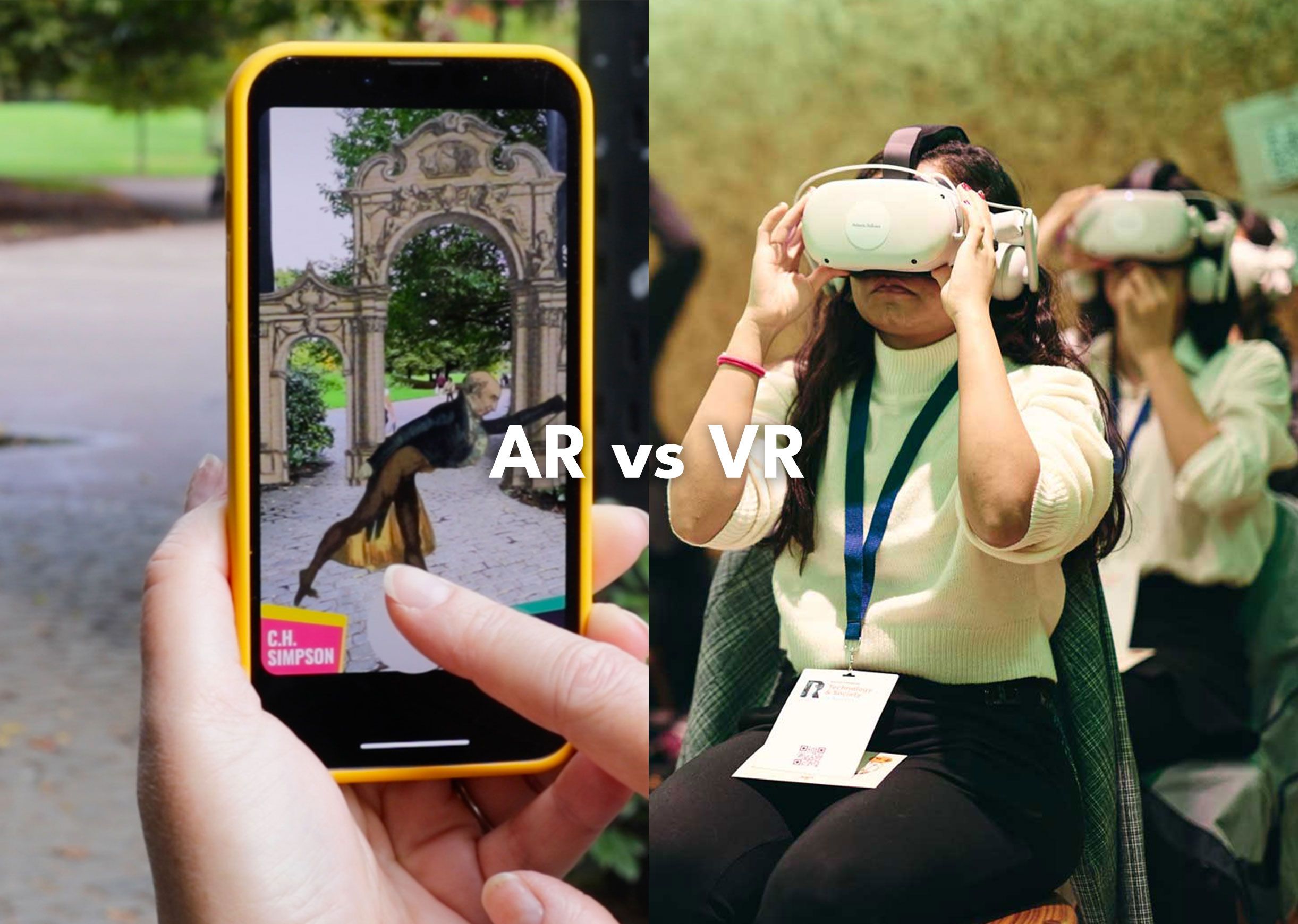
If you’ve ever sat in a meeting and heard someone casually drop “AR,” “VR,” or “XR” into the conversation – and you’ve nodded along whilst secretly thinking …what? – you are not alone. These terms get thrown around a lot, and while they all sound a bit sci-fi, they’re actually part of a tech toolkit that’s already shaping our day-to-day experiences.
At Zubr, we’re well-versed in the differences between AR and VR. We spend a lot of time building these kinds of projects, from playful AR treasure hunts to fully immersive VR worlds, so we thought we’d break it down for you. And yes, we’ll give you some real examples from our own work along the way.
Augmented Reality (AR): Your world, upgraded
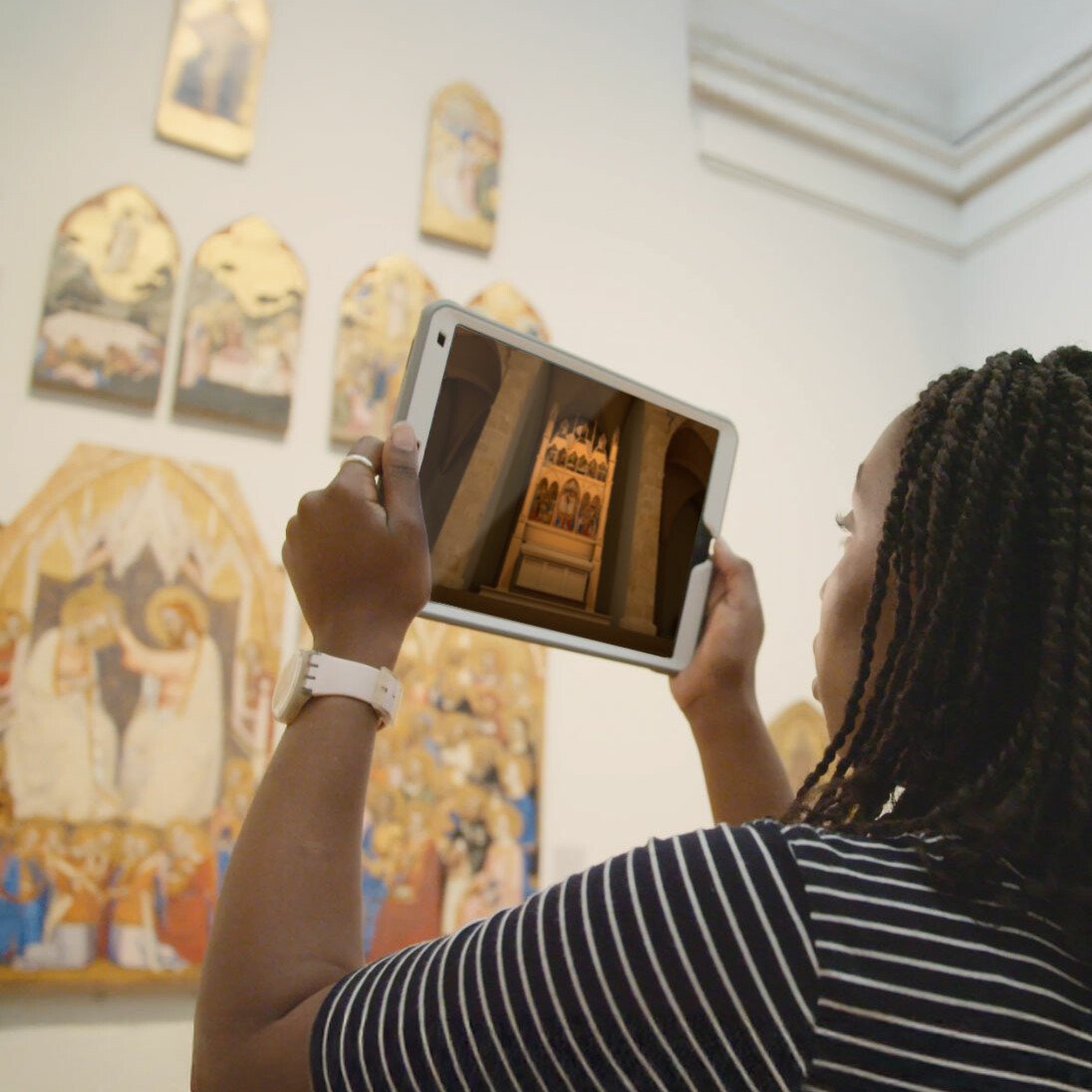
Augmented Reality enhances the real world by overlaying digital content onto physical surroundings. Whether it’s interactive museum installations, digital trail guides or animated filters on Tiktok, AR brings virtual elements into everyday life without disconnecting us from the real world. Unlike VR, which shuts out the real world entirely, AR works with what’s already there, making your everyday environment a little more magical.
At Zubr, we specialise in app-based AR for iOS and Android, WebAR experiences that run straight from your browser, and even Tiktok AR filters and effects. These tools are easy to access on smartphones or tablets, allowing us to deliver captivating content directly into people’s hands – no headsets required.
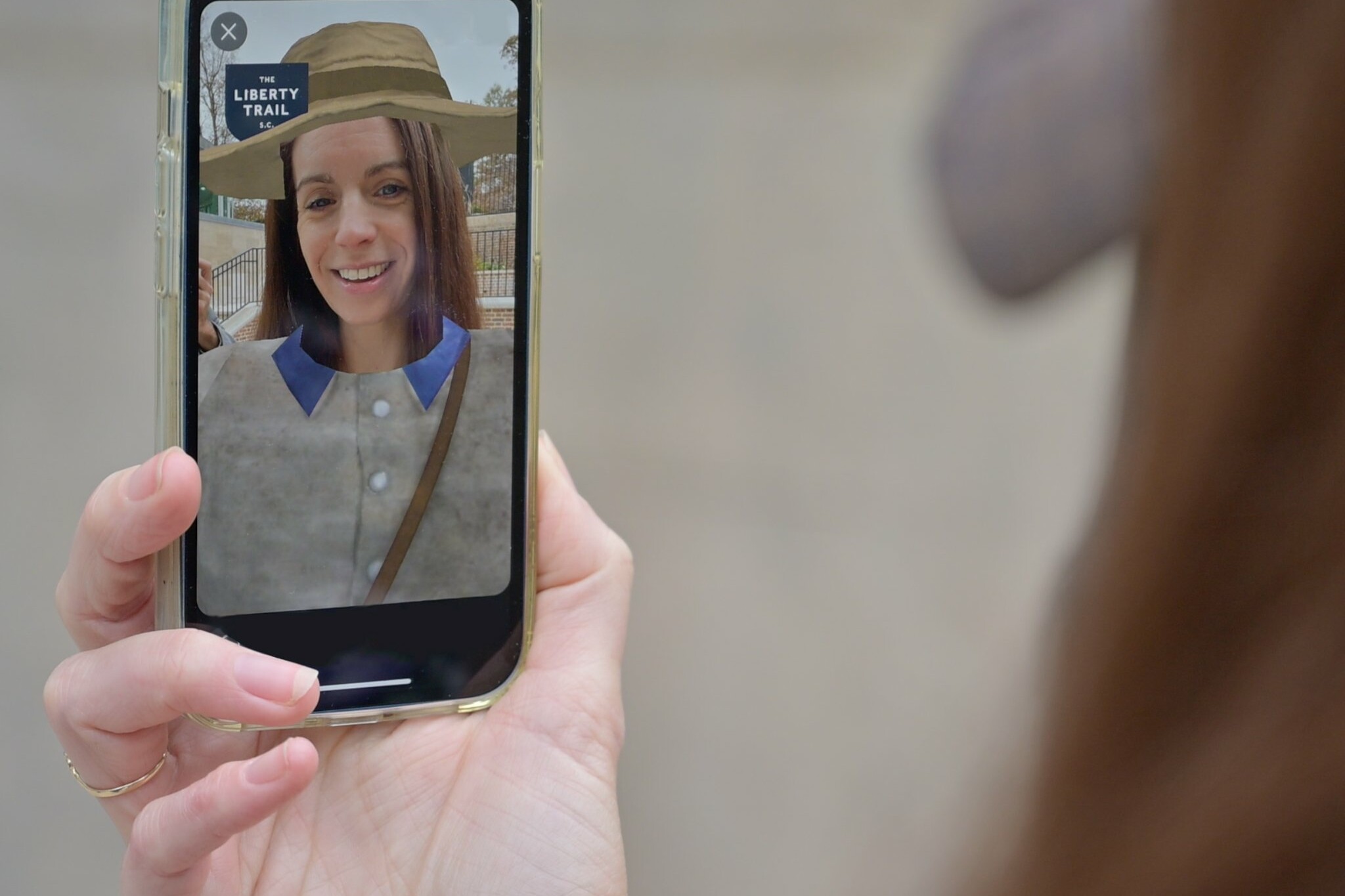
How we use it at Zubr: We’ve built AR trails that turn city streets into interactive stories (such as our Vauxhall AR Trail and Liberty Trail AR), created AR binoculars for location based storytelling (like our Europa Binoculars), and even built an app that reconstructs the historic interiors of an iconic Welsh castle (M[AR]GAM).
Virtual Reality (VR): Welcome to a whole new world
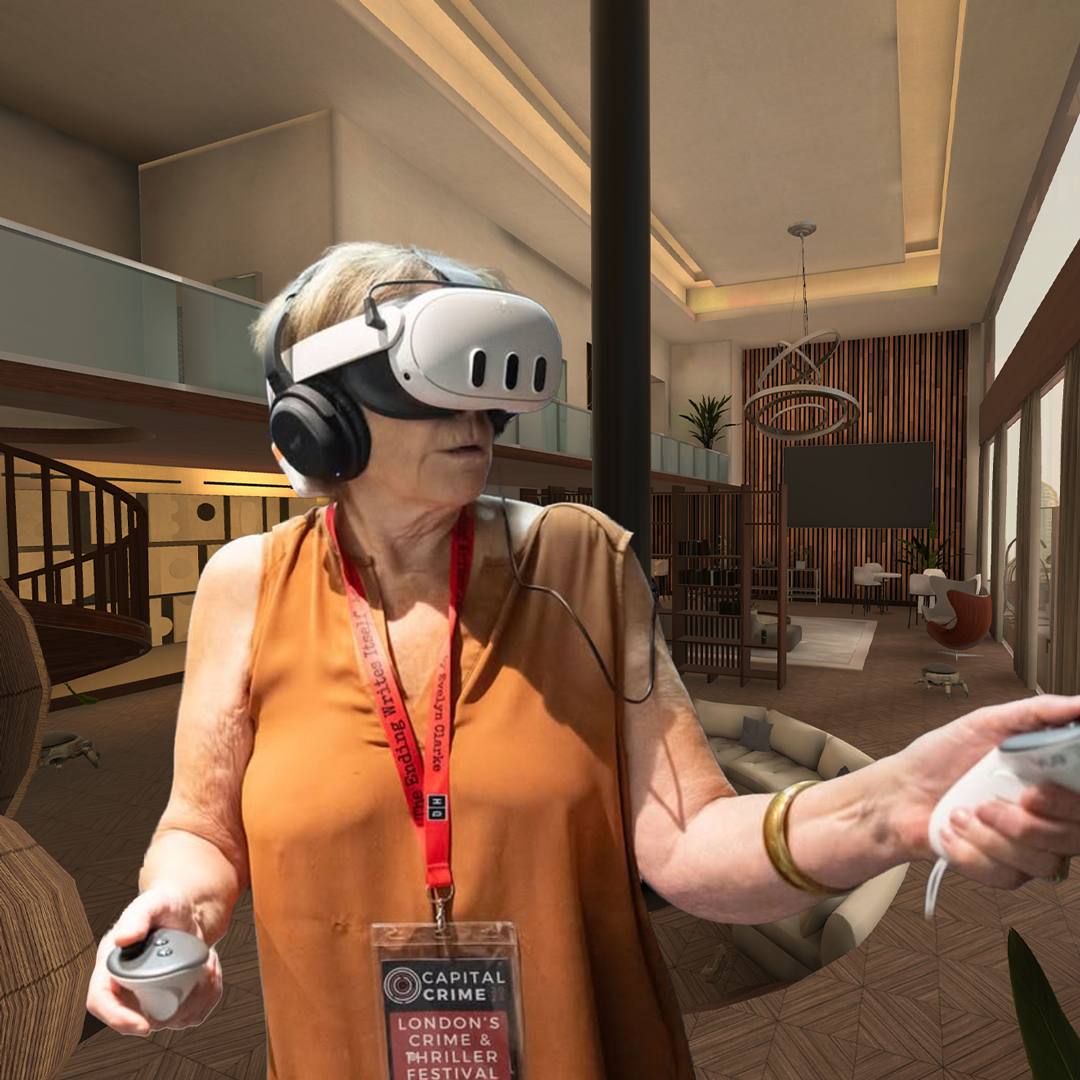
VR takes immersion up several notches. Pop on a headset, and suddenly you’re somewhere completely different; standing in a futuristic cityscape, exploring an ancient ruin, or walking through a 360° training simulation. It blocks out the real world entirely, placing you right in the middle of a fully digital environment where you can look around, move, and interact.
At Zubr, we use powerful game engines like Unity to build fully interactive 3D environments; capture real-world 360° VR content; and create hybrid experiences combining real footage and virtual spaces (for example, our green screen characters in Afloat & Ashore). VR enables deeper engagement, replicating complex real-world scenarios with full sensory immersion – ideal for training, storytelling, and experiential marketing.
How we use it at Zubr: We’ve recreated real-world locations for virtual festivals (Virtual Upfest), brought archival spaces back to life (Bill’s Attic), given fans an interactive courtside view (NY Knicks experience), and built training simulations for Network Rail, where teams can practise high-stakes situations in a safe, repeatable environment.
Mixed Reality (MR): When real and virtual meet
MR is the sweet spot between AR and VR. It blends context-aware digital content with the stereoscopic, head-mounted displays traditionally associated with VR, whilst still anchoring experiences in the user’s real-world environment.
MR is often described as technology that can understand and respond to the physical world around you. Whilst this can be true, it isn’t exclusive to MR – many AR experiences also interact with real-world spaces and objects. As immersive AR continues to evolve, the distinctions between AR and Mixed Reality are becoming less rigid.
What truly distinguishes Mixed Reality is its delivery: MR experiences are typically accessed through head-mounted displays that allow the real world to remain visible to the user, either optically or via a camera passthrough. Imagine putting on a headset and seeing a digital character sitting on your desk, then being able to move around it, inspect it from different angles, or touch it – all whilst in your real world surroundings. The result is an experience that feels responsive, making the line between “real” and “digital” feel excitingly blurred.
AR, VR, and MR all sit under the broader umbrella of Extended Reality (XR). A helpful way to think about XR is as a spectrum of immersion: AR at one end (a light layer of digital content over the real world, usually through phone or tablet), VR at the other (a fully digital environment viewed through a headset), and MR somewhere in between.
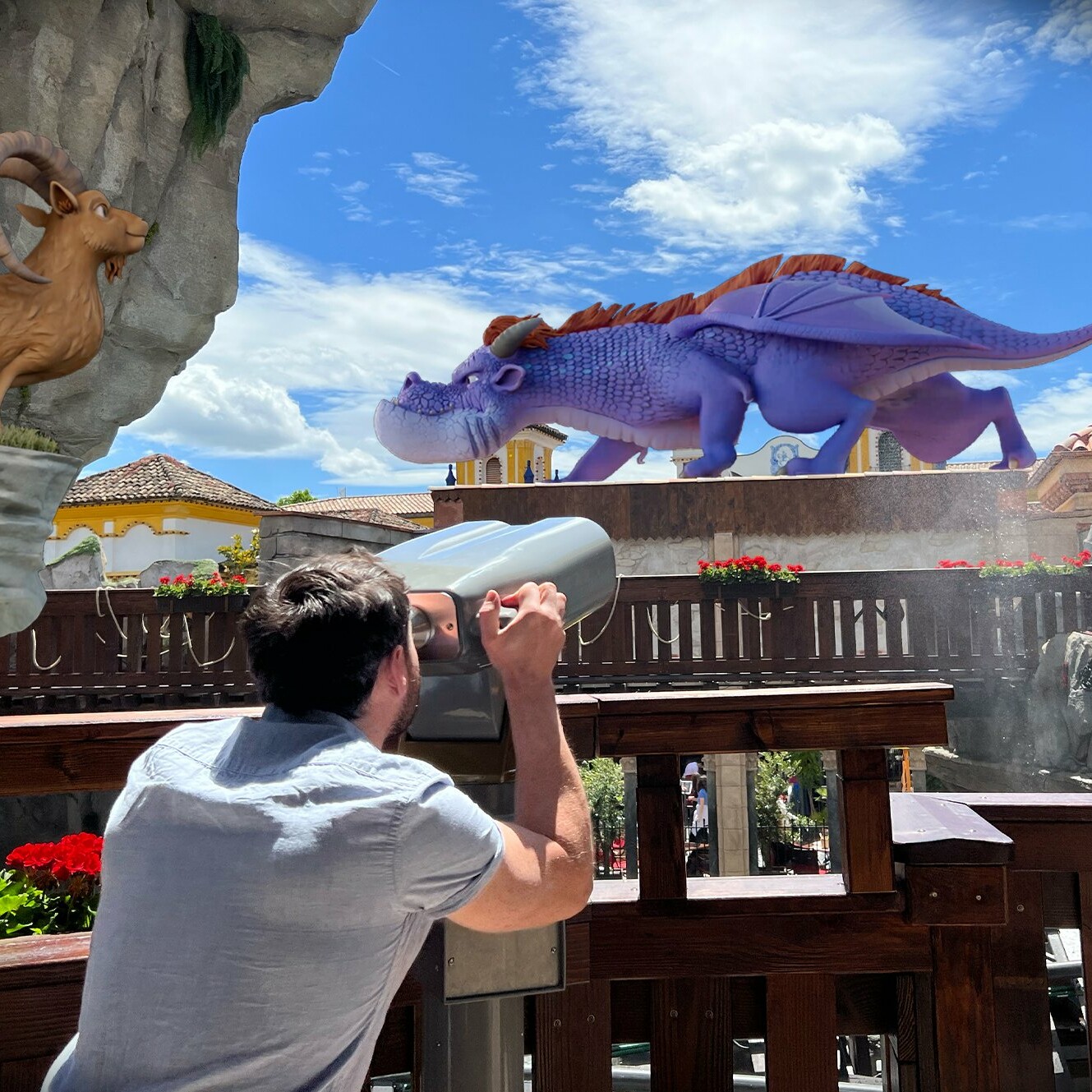
At Zubr, many of our binocular experiences take a Mixed Reality approach, such as our handheld binoculars for Beckford’s Tower, and our binoculars trail at Europa Park.
Why we love "light-touch" XR
Not everyone wants – or can afford – big, chunky headsets or complicated app downloads. That’s why we’ve invested in accessible, “light-touch” XR formats.
So, what exactly does “light-touch” mean? The concept of “light-touch” XR refers to immersive experiences that are easy to dip in and out of. In turn, these experiences tend to be more accessible, as users aren’t faced by common immersive barriers such as overwhelm or lack of equipment.
We’ve built web-based AR experiences that run instantly in your browser, designed custom binoculars that turn public spaces into immersive viewing points, and created pop-up installations that need zero technical onboarding. User experience is always a front and centre consideration in our projects and collabs, whether it’s for a festival, museum, marketing event, or public trail, our goal is to make it as easy as possible for people to join in!
Examples of our “light-touch” work include the Grand Junction Digital Guide, Vauxhall AR Trail, and our 1920s Cinema AR Trail.
Bringing your ideas to life
Whether you’re dreaming up an AR trail for a heritage site, a VR training program for your workforce, or an MR installation that’ll wow visitors, understanding the differences between these technologies helps you pick the right tool for the job.
We’ve worked on over 400 immersive projects, and we’ve learned that the magic happens when creativity and tech pull together in the same direction. If you’re ready to explore what XR could do for your audience, we’d love to chat – you can even book a free hour of consultation to start shaping your idea.