
Physical Art Exhibit Transformed by VR at The 14th Factory
Adding a Virtual Dimension to Modern Artworks
Stepping into the contemporary art world, Zubr was commissioned by the team at Unthinkable, a diverse collective of digital practitioners, to collaborate with internationally renowned artist Simon Birch and the visionary team behind The 14th Factory.
Our brief called for a collection of immersive reimaginings of Birch’s physical artwork, expanding their narratives beyond the boundaries of the material world. The challenge lay in translating the emotion and energy of Birch’s work into digital form – not as simple reproductions, but as living extensions of the artworks themselves. Immersive technology was the ideal medium to deepen the connection between story, space, and experience.
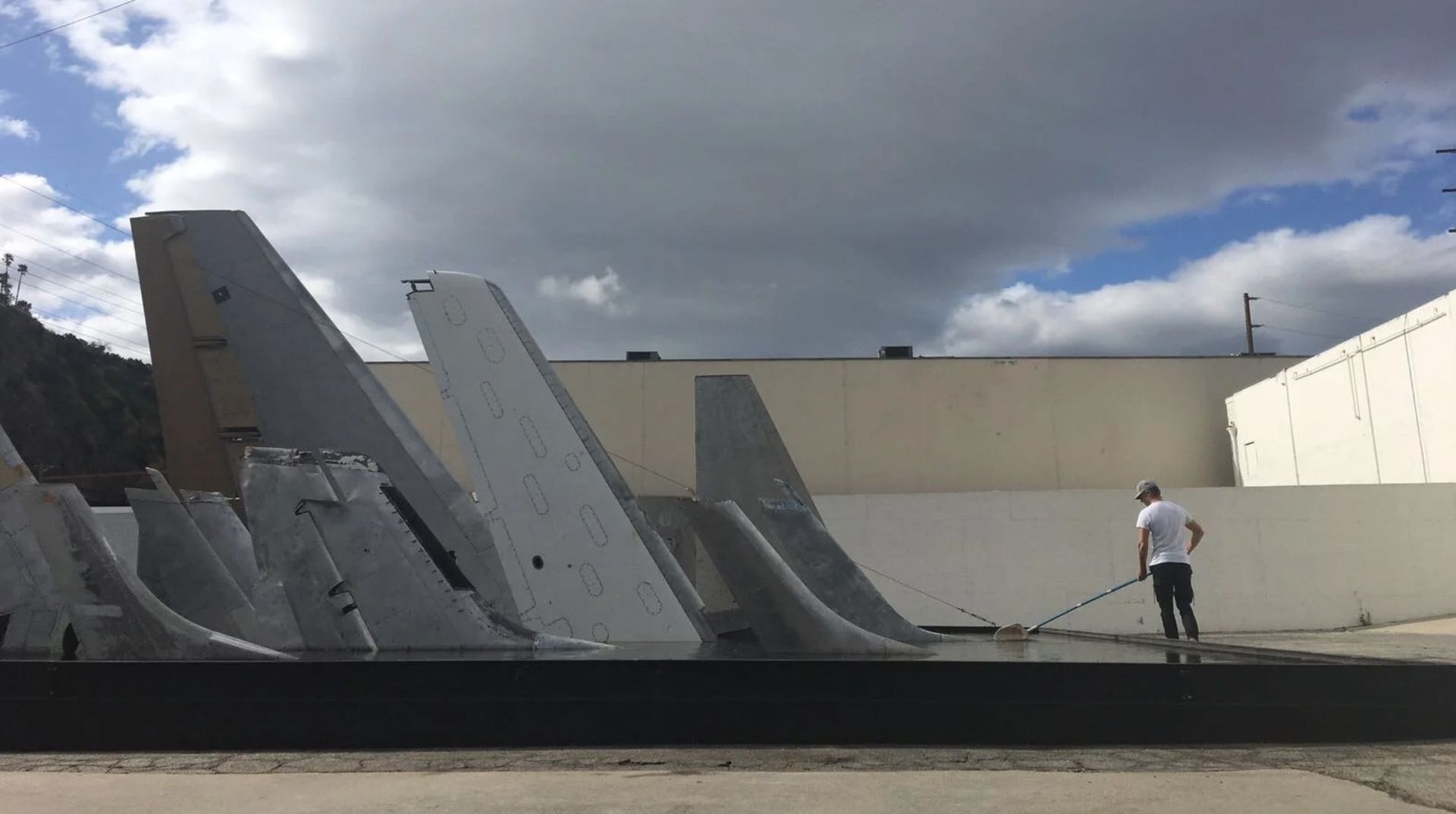
We produced an alternative, Virtual Reality interpretation of Clear Air Turbulence (2016-17), created by Simon Birch. The physical counterpart of the piece centres around salvaged aeroplane tails, erected in a steel-framed pool filled with water. Zubr’s digital interpretation extended the vision of this piece, inviting audiences to descend beneath the water’s surface – both literally and metaphorically.
Partners
In partnership with Unthinkable, we were invited to be a part of this exciting project. Our thanks go to Creative Director, Jack Hardiker (Office of Everyone); Project Manager and Unthinkable Director, Matthew Shorter; and of course, Artist and 14th Factory Founder, Simon Birch.
Translating Dualism into Digital Form
Dualism has always been central to The 14th Factory’s creative output; the cyclical rise and fall is a signature throughout Simon Birch’s work.
Zubr’s virtual interpretation built upon the theme of transformation, both above and below the water’s surface. In VR, visitors crossed the threshold between two distinct worlds:
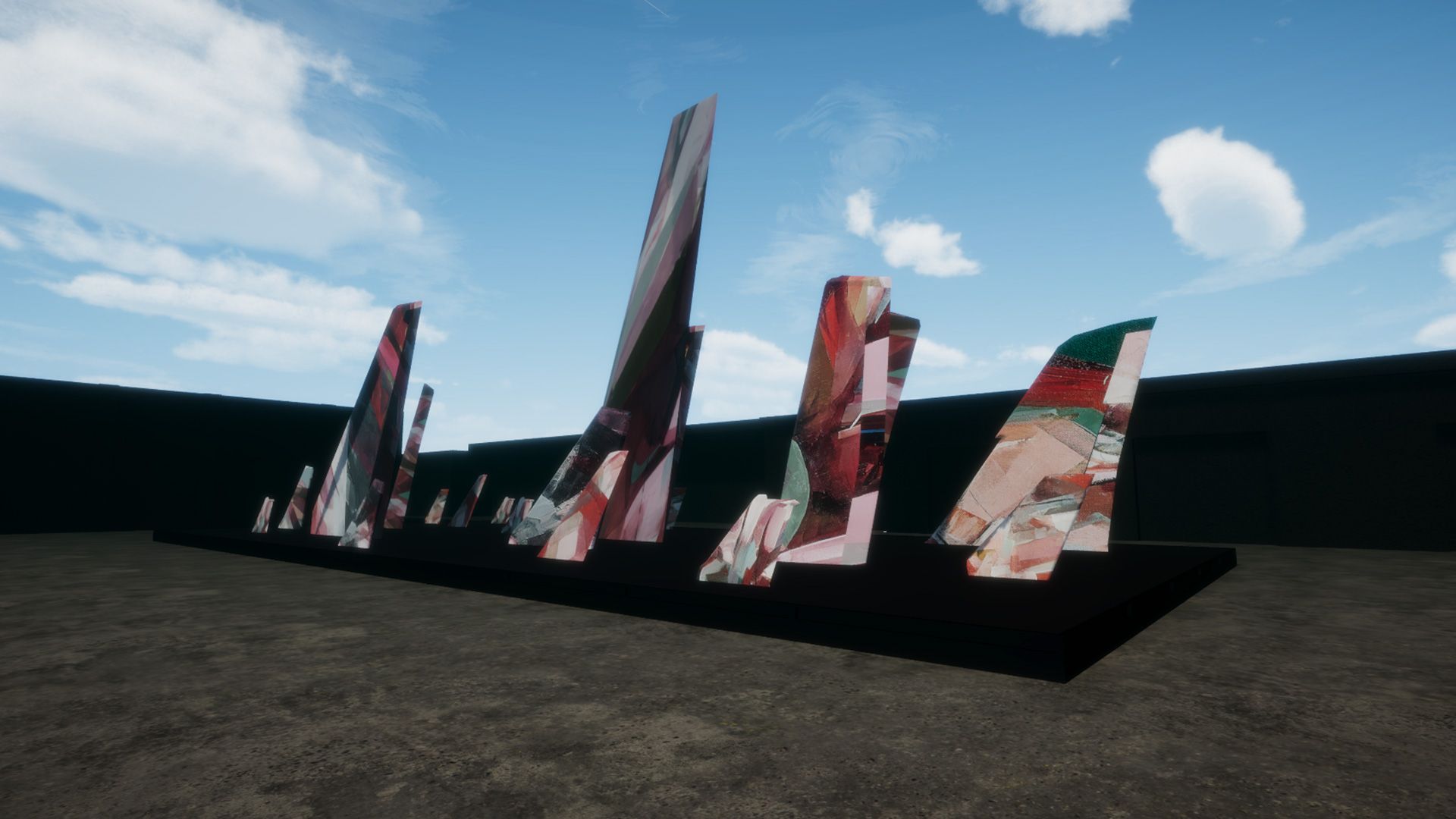
- Above the waterline, a faithful digital reconstruction of the physical artwork appears – with a twist. A shift in perspective transforms the familiar piece, as the reverse of the plane tails reveal Birch’s 2D artworks layered across their surfaces.
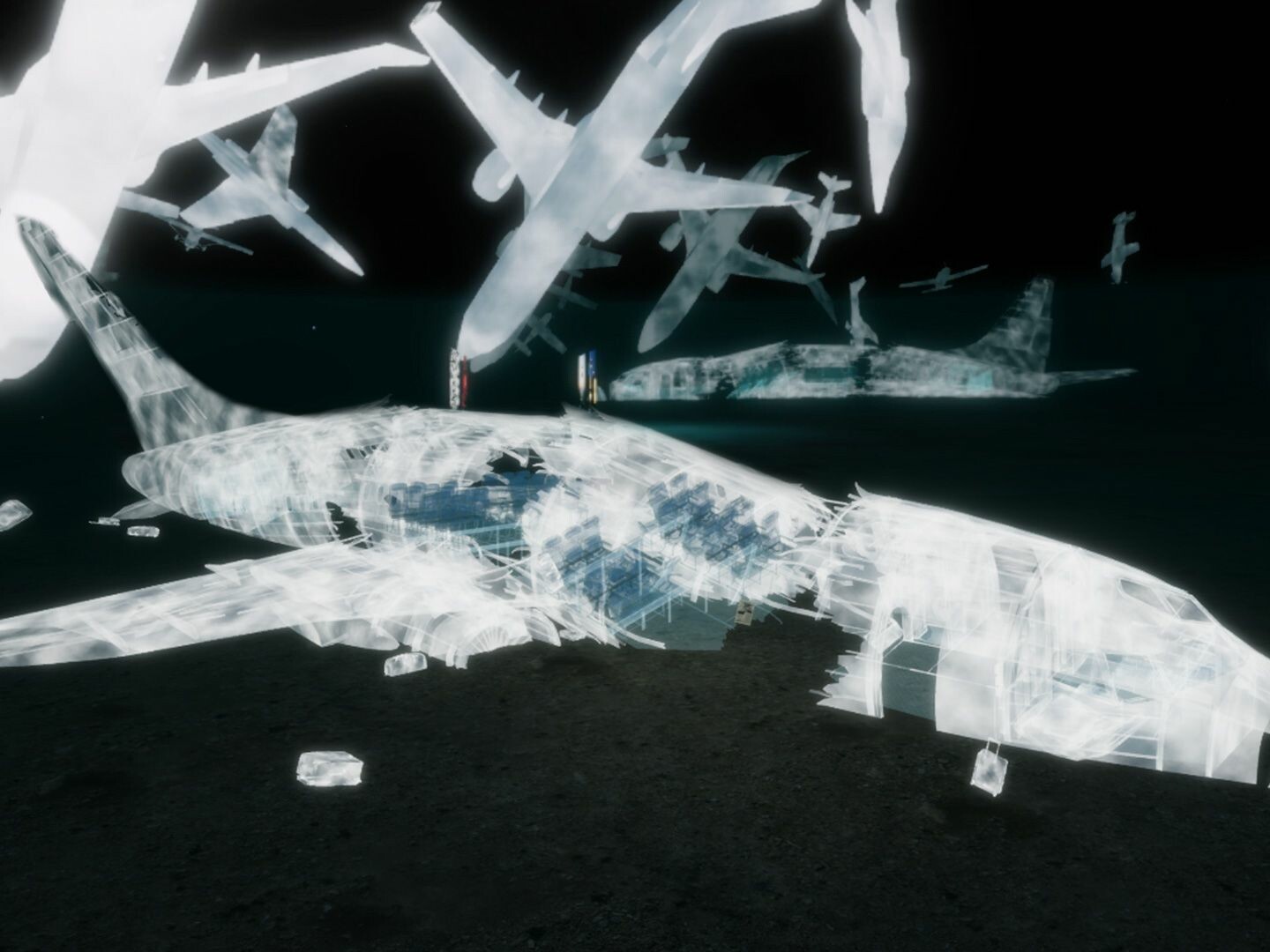
- Beneath the surface of the water, a submerged realm unfolds – an ethereal aviation graveyard scattered with ghostly fragments of aircraft. Through immersive sound and interactive exploration, participants uncover hidden stories in the wreckage, as voices of passengers echo to create a multi-sensory experience.
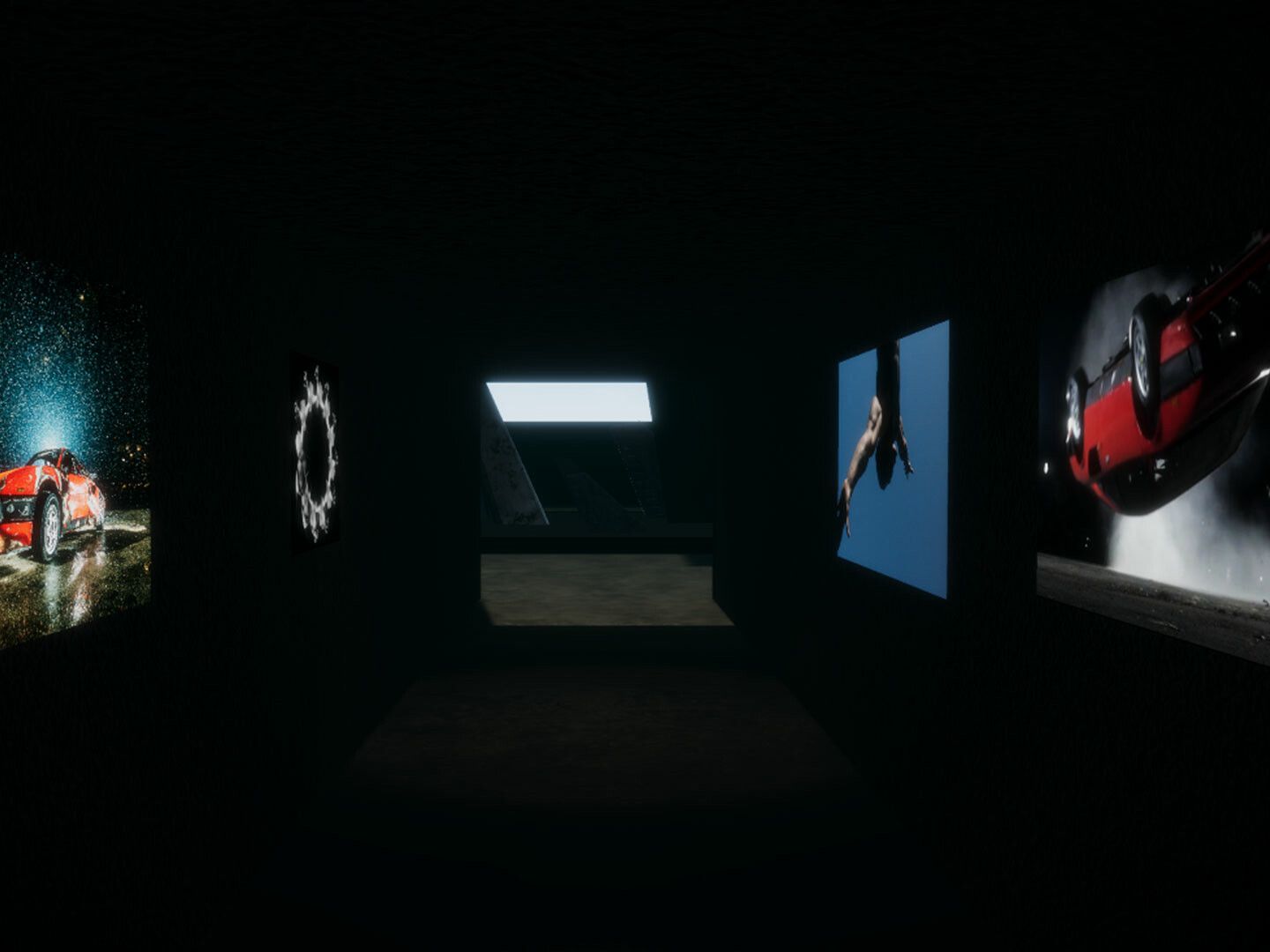
As users step into the virtual pool, they begin to sink, gradually descending into this otherworldly environment. Among the wreckage, they will also encounter an underwater NFT gallery, a collection of up to six digital works suspended in the depths.
We set out to explore how immersive technology could amplify the installation’s impact whilst preserving the visceral immediacy so often lost through photography or video. Rather than simply recreating the physical piece, we aimed to build a virtual world that felt like a continuation of Birch’s world, echoing his themes of duality and transformation.
The Technology Behind the Experience
Our team built a sophisticated real-time 3D environment, recreating the complex interactions of light, metal, and water through advanced 3D rendering and physics systems. Reflection probes, PBR texture maps, and volumetric lighting were used to simulate the shifting interplay between surfaces, mirroring the sense of instability and transformation central to Birch’s work.
Incorporating Simon Birch’s 2D artworks into the digital reconstruction, we developed a process of digitally painting them onto the surfaces of the aircraft tails. This approach transformed each element into a canvas, allowing Birch’s imagery to extend seamlessly into the virtual space.
Outcome
The result is a hybrid body of work that blurs the boundaries between physical and digital, art and story, real and imagined. Through our Virtual Reality interpretation, Zubr helped Birch and The 14th Factory extend their vision into new dimensions. This offered audiences not just representations of art, but immersive portals into its deeper meaning.
The project demonstrated how Virtual Reality can serve as both an interpretive and creative medium, expanding the narrative potential of physical artworks and transforming how audiences engage with contemporary art.