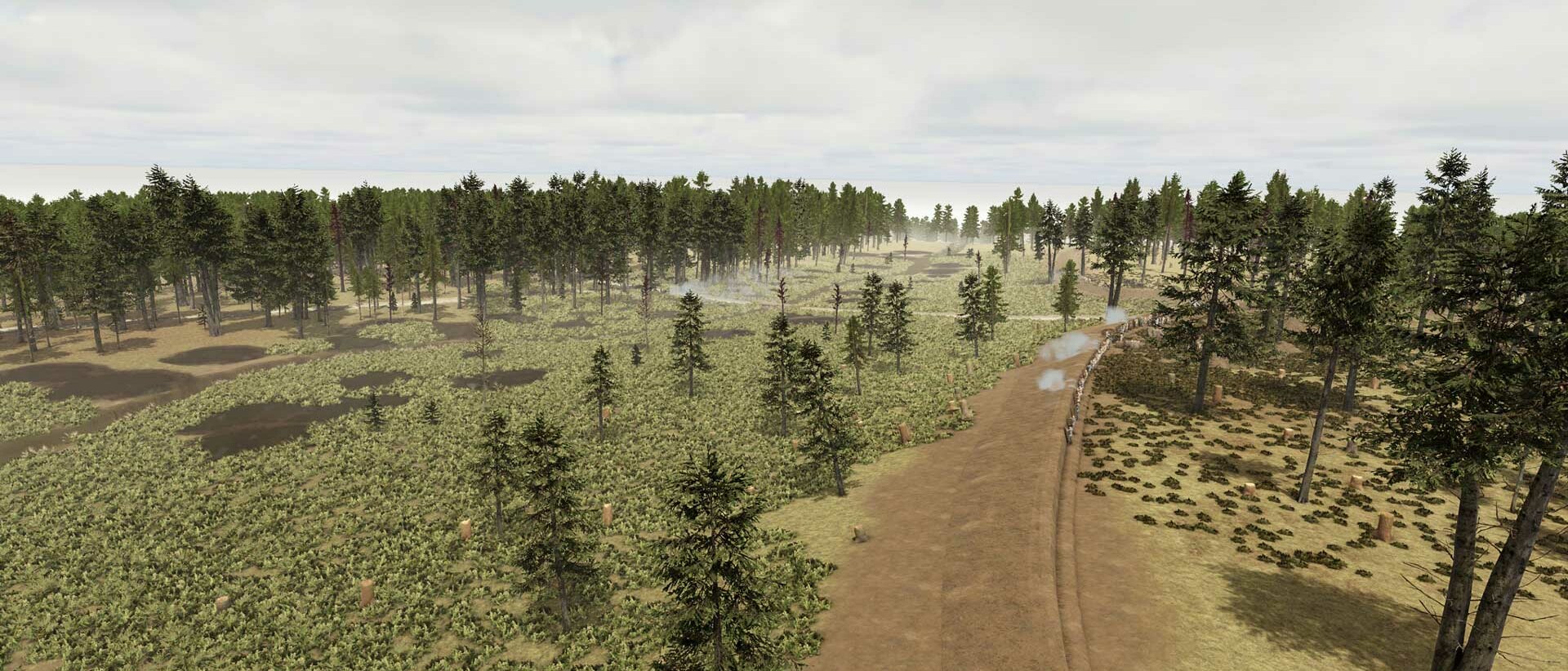
Bringing a Civil War battlefield to life through augmented reality
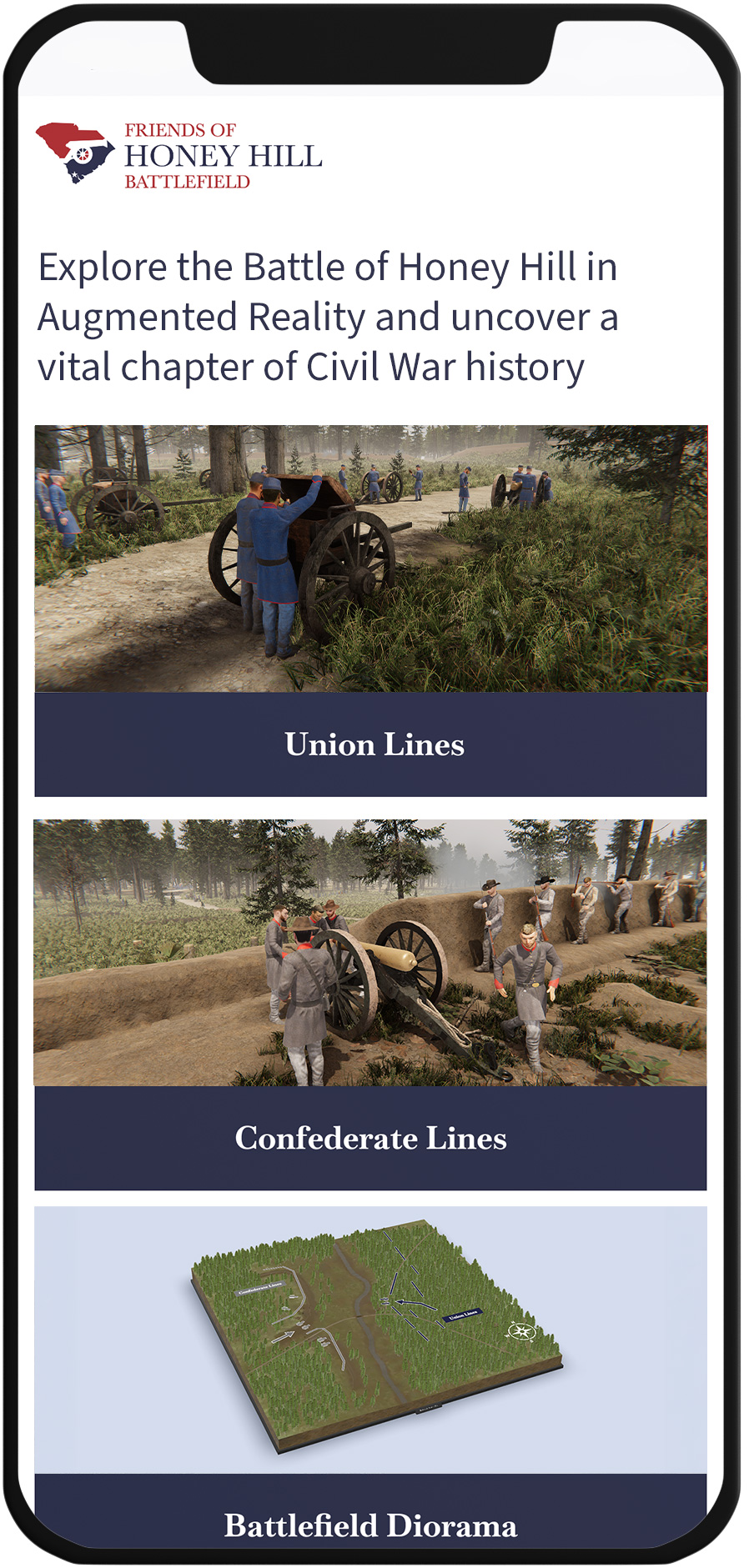
American Civil War WebAR experience
Developed in partnership with the Friends of Honey Hill Battlefield, the Honey Hill experience is an innovative heritage project that uses augmented reality to reconnect visitors with one of the most significant Civil War battlefields in South Carolina – in time for USA 250 celebrations.
Designed as a lightweight, highly accessible experience, the project can be deployed at the Honey Hill viewing platform in the wooded landscape east of Ridgeland, SC, whilst also serving as an educational resource for audiences exploring the site’s history from elsewhere.
Partners
The experience was developed in collaboration with the Friends of Honey Hill Battlefield. We are particularly grateful to Richard Thomas, President of the FOHHB, who served as our primary point of contact and played a pivotal role in shaping the project through his enthusiasm, insight, and support. We are also grateful to Dr. Stephen Wise for providing expert historical consultation and guidance throughout development.

A new chapter in historical interpretation
The Honey Hill project marked Zubr’s first high resolution pre-rendered WebAR experience, building on the expertise developed through previous heritage projects such as the Liberty Trail Digital Suite, which explored stories from the American Revolutionary War.
Working closely with the Friends of Honey Hill Battlefield, the project was designed to complement and enhance the site’s existing interpretation. Visitors to Honey Hill can already explore preserved battlefield features, follow interpretive panels and maps, and gain insight into the battle through educational resources and guided experiences. The AR experience adds a new digital layer to this established offer, helping visitors visualise the events of 30 November 1864 whilst standing within the landscape where they unfolded.
To ensure historical authenticity, our team conducted extensive research into the Battle of Honey Hill. This included detailed investigation into the battlefield environment, troop movements, artillery positions, military equipment, uniforms, and weaponry used by both Union and Confederate forces, enabling us to create a faithful and engaging representation of the battle.
Accessible by design
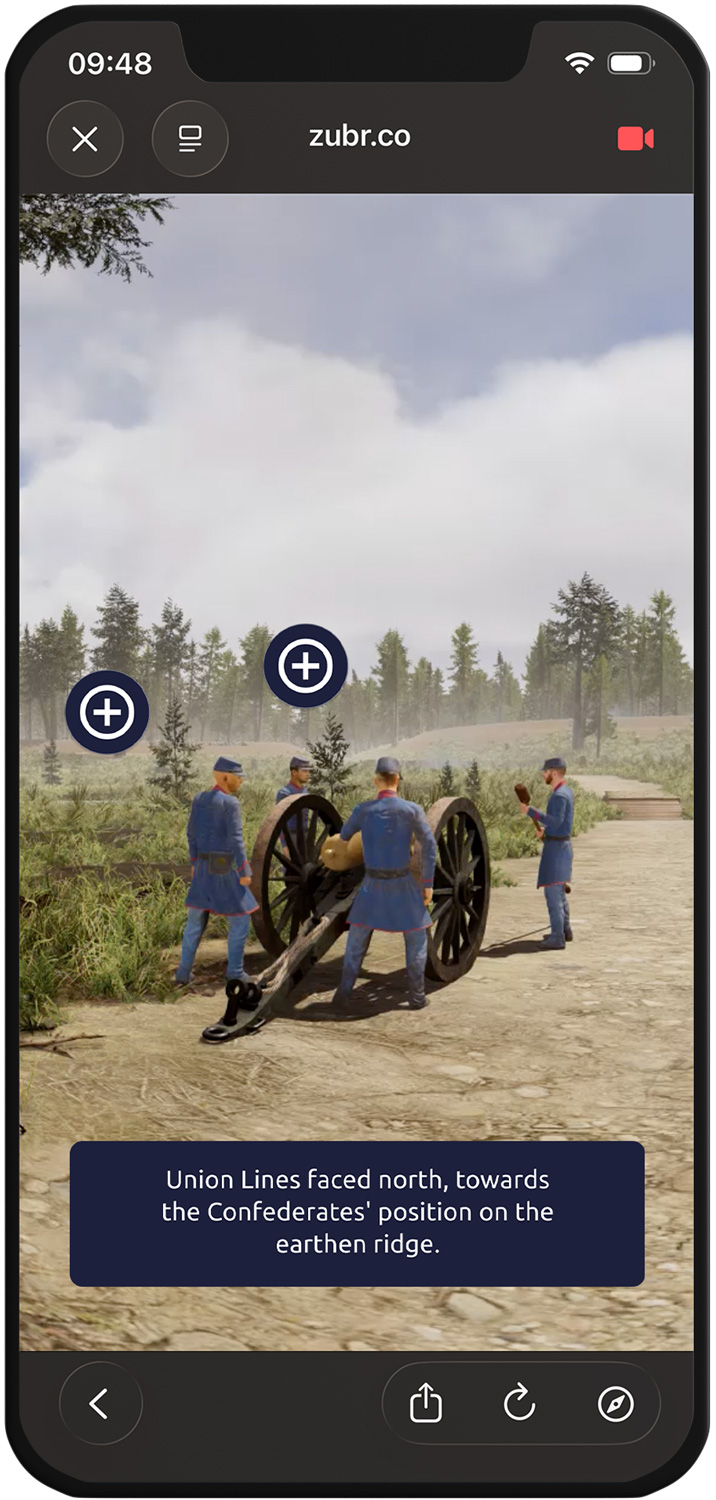
Accessibility was a key consideration from the outset. Rather than requiring visitors to download a dedicated application, Zubr delivered the experience entirely via our WebAR platform, allowing users to access the content directly through their mobile browser.
The experience presents key moments from the battle from both Union and Confederate perspectives, enabling visitors to better understand the challenges, tactics, and viewpoints of each side. These immersive 180-degree pre-rendered scenes are complemented by an interactive tap-to-place 3D battlefield diorama, providing additional context and a broader overview of the engagement.
To achieve the highest possible visual quality, Zubr adopted a hybrid production pipeline that combined the flexibility of real-time game engines with the fidelity of pre-rendered videos. Rather than rendering complex scenes live on a mobile device, the immersive battle sequences were pre-rendered in advance as high-quality video, allowing us to use significantly more detailed environments, character models, lighting and visual effects than would typically be possible in a fully real-time mobile experience.
The result is an experience that combines exceptional visual realism with the accessibility and reliability of our WebAR platform, delivering a high-quality heritage interpretation that performs consistently across a wide range of smartphones.
Creating an immersive battlefield
A combination of ambient sound design, muzzle flashes, drifting gun smoke and particle effects recreated the atmosphere of the battlefield, encouraging visitors to engage more deeply with the events that unfolded there. By recreating the coordinated movements of infantry and artillery, visitors could appreciate the scale and complexity of the battle.
Animating the battlefield scenes presented one of the project’s most significant creative challenges. Dozens of soldiers and artillery crews had to perform different actions simultaneously, with movements carefully timed to interact convincingly across the scene. Cannon crews, for example, required tightly coordinated sequences of loading, aiming, firing and recoil, all synchronised with surrounding infantry movements, visual effects and audio. As with any animation project, careful planning and blocking of key poses was essential, as even small timing adjustments later in production could have a cascading effect across multiple characters and events.
AI-assisted animation tools helped streamline parts of the process by generating natural in-between motion, allowing our animators to focus on choreography, timing and performance whilst retaining full creative control over the final result.
Authentically modelled uniforms, weapons and military equipment further enhanced the educational value of the experience, ensuring historical accuracy remained at the heart of the storytelling and helping visitors better understand the realities of the Battle of Honey Hill.
AI as a creative tool
Whilst artificial intelligence has become an increasingly prominent topic across the creative industries, our approach on the Honey Hill project was deliberately measured. Rather than relying on AI to generate finished content, we used AI tools at specific stages of our existing production pipeline where it could improve efficiency whilst keeping artistic and historical decisions firmly in human hands.
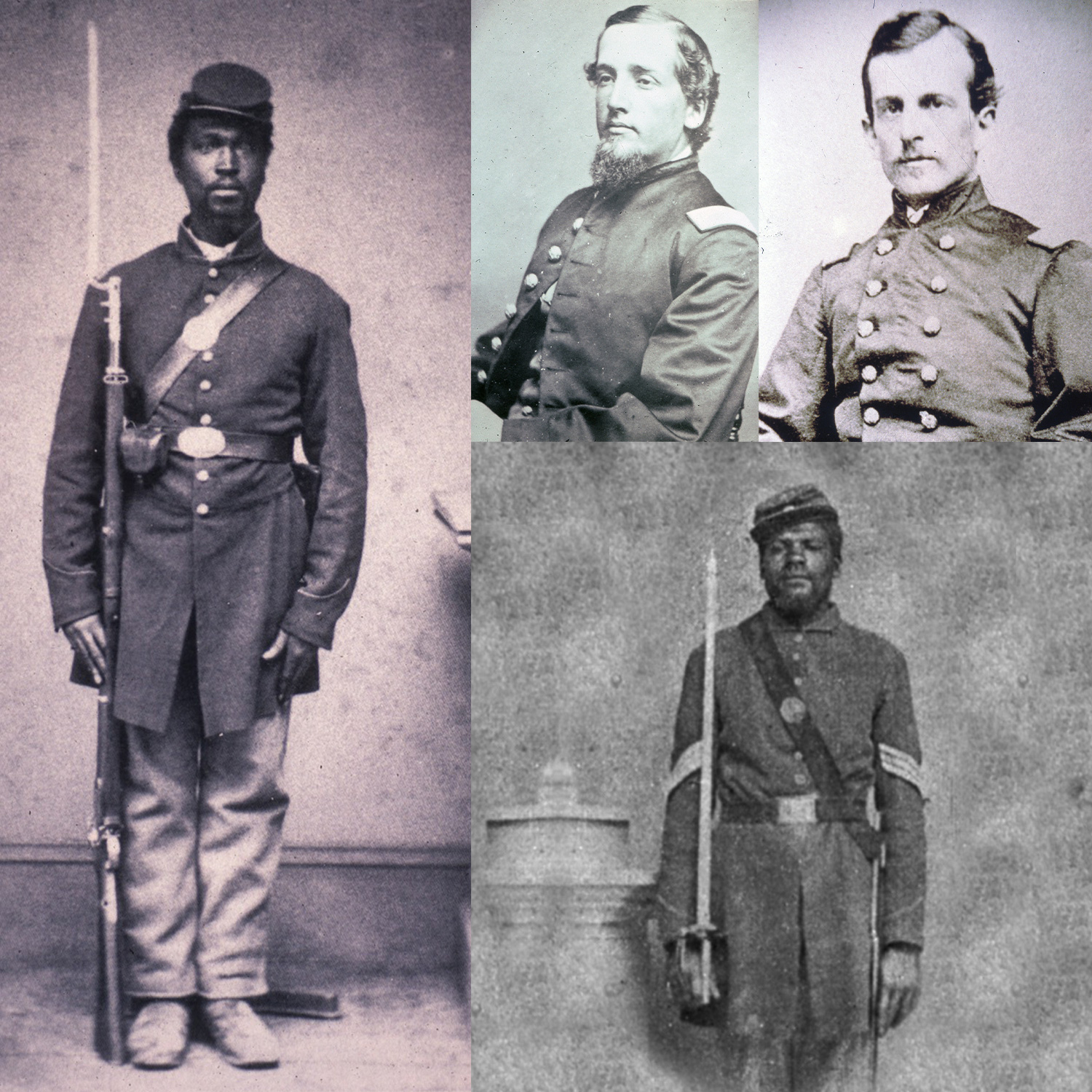
One example was the creation of character faces for the Union soldiers. Our research included images and descriptions of some of the individual soldiers present at the battle. We used AI to generate realistic faces with varying ages, ethnicities and facial features, based on this historical material, as a starting point before refining using our established character creation workflow. This allowed us to produce historically appropriate soldiers more efficiently whilst maintaining complete creative control over the final assets.
This hands-on approach reflects our wider philosophy towards AI. Rather than replacing creative expertise, AI was used as a production tool to streamline repetitive tasks, thereby enabling us to focus on the detail – ultimately resulting in better value for our client.
In summary
The Honey Hill American Civil War WebAR experience demonstrates how emerging technologies can enrich heritage interpretation without replacing the authenticity of the historic landscape. By combining rigorous historical research, close collaboration with subject experts and accessible WebAR delivery, the project enables visitors to experience the Battle of Honey Hill in a way that is both immersive and historically grounded.
From the use of pre-rendered augmented reality and AI-assisted production tools to detailed environmental reconstruction and authentic military assets, every technical decision was made with the aim of helping people better understand the events that unfolded on this remarkable battlefield.
The result is a browser-based heritage experience that combines the best of emerging technology with careful research, creativity and thoughtful interpretation, bringing history to life for today’s audiences whilst preserving the integrity of the past.