
Zubr's AR Books
Augmented reality books layer digital experiences over physical print, transforming the page into an interactive gateway. By scanning illustrations with a phone or tablet, readers can unlock animations, sound, 3D objects, games, or even mixed-reality storytelling.
At Zubr, we believe AR should enhance print, not replace it. Physical books anchor attention and create shared reading moments. Maintaining the tactile experience of holding a book in your hands, we use AR to add depth, movement, and participation.
For children, this can turn passive reading into playful, captivating discovery. For adults, it can open archives, artworks, and ideas in ways static pages cannot. The result is a hybrid medium that bridges imagination and information – inviting readers to see, hear, and explore what was previously one dimensional.
Below we take a look through three of our past projects, which each follow a different approach, to illustrate why AR books matter.
AR Insects Alphabet
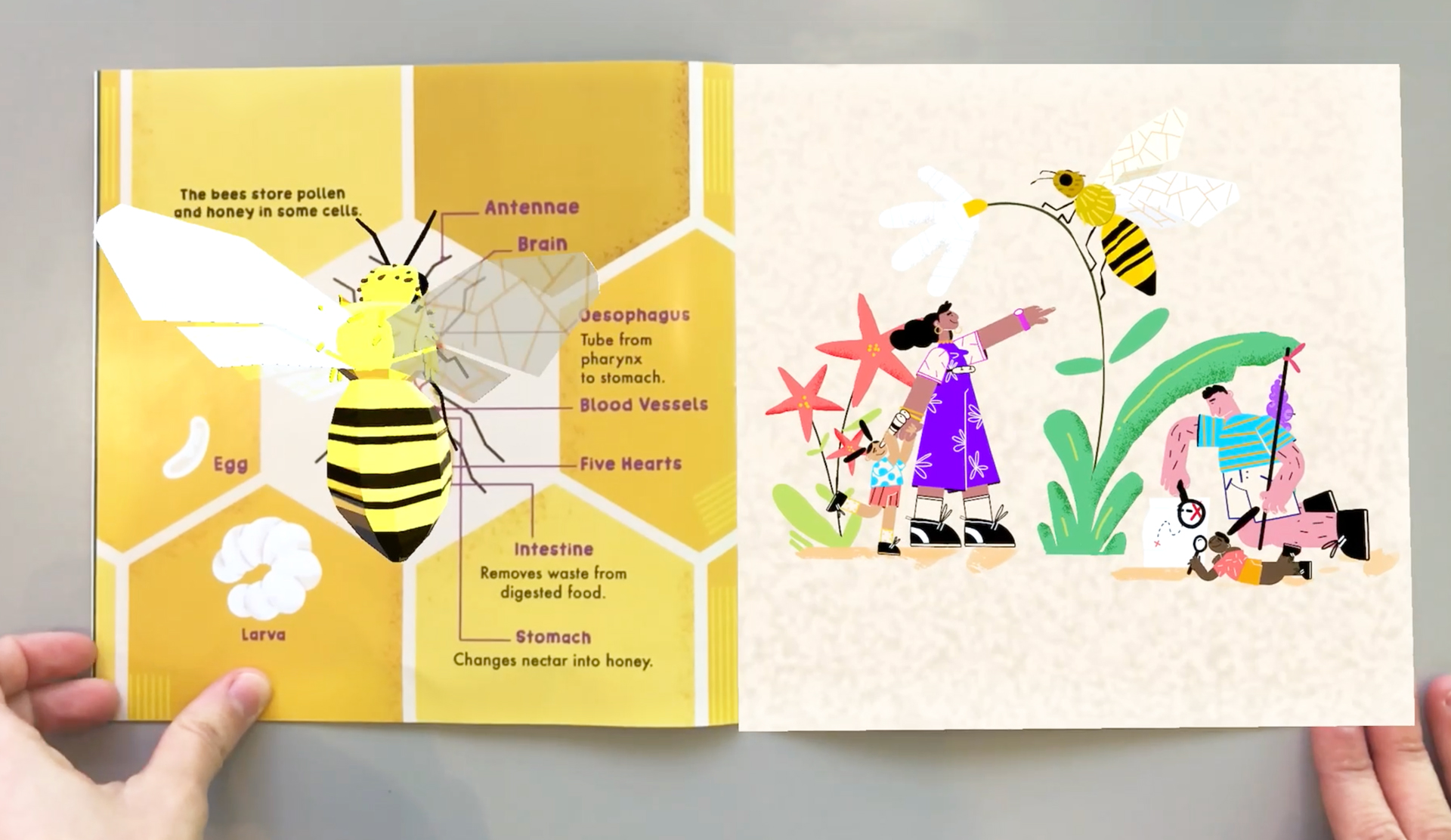
Developed in partnership with Buttercup Learning, this early-years title introduced babies and toddlers to the natural world through both beautiful print artwork and interactive AR play. Pairing simple letter learning with gentle facts about each featured insect encouraged curiosity – amplified by the delight of discovering the moving AR elements dancing around each page!
Scanning the pages reveals animated scenes layered over the illustrations: insects crawl and fly, leaves tumble and flowers bloom. The digital elements are deliberately calm, reinforcing rather than overwhelming the printed artwork.
A distinctive feature of the project was a set of physical “bee tokens”, included at the back of the book. These can be placed anywhere in the world, though the book encourages children to take the tokens outdoors and scan them. An AR bee appears, buzzing and flitting around the space before them. This simple mechanic shifts learning from page to place, nudging families outside and connecting with Buttercup Learning’s wider mission: to help families learn more about nature, to inspire children to explore the outdoors, and to embed respect for conservation from an early age.
Unlocking the Cage
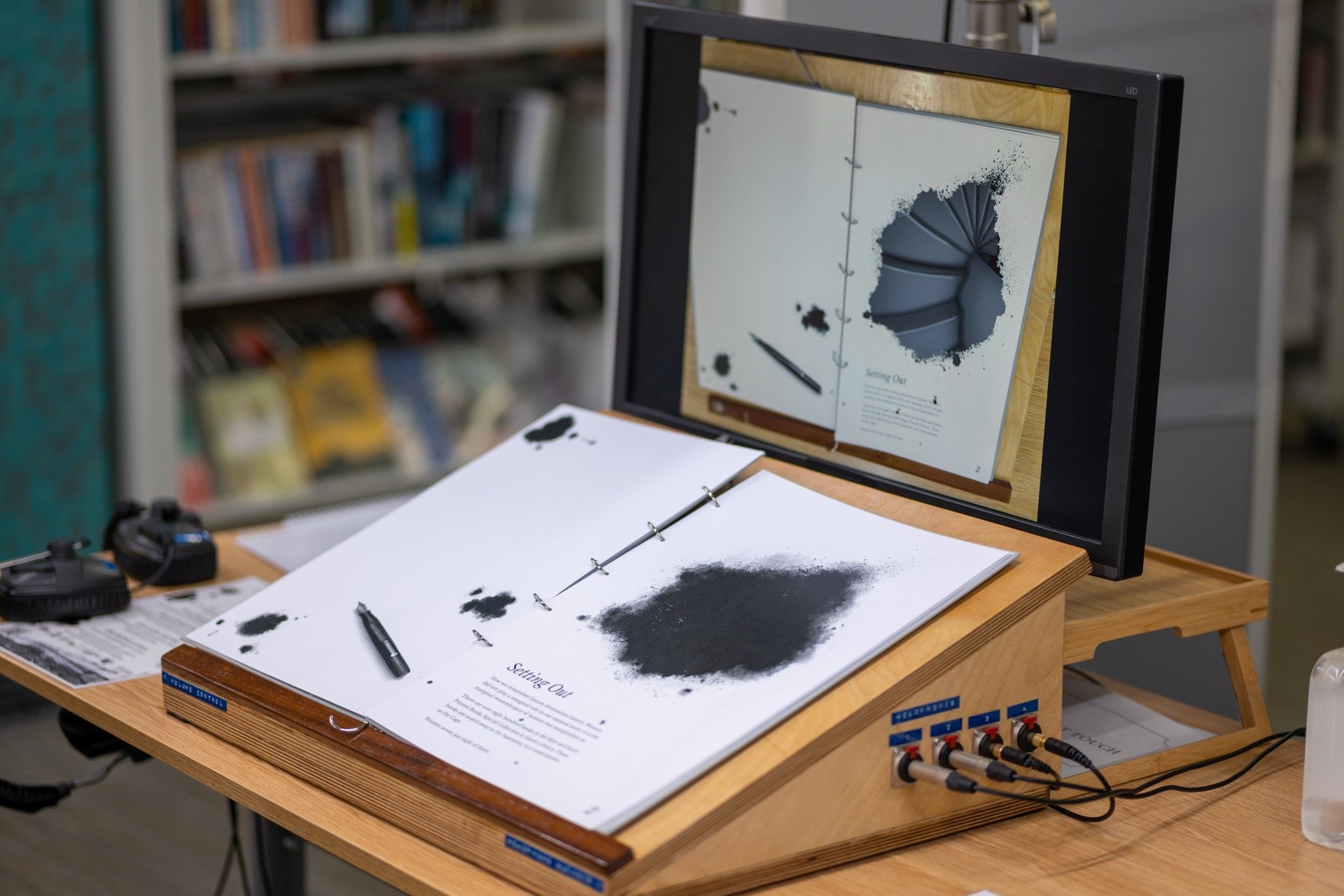
Not all AR books are for children. In collaboration with Libraries Unlimited, Zubr produced a mixed reality publication based on award-winning author Kim Sherwood’s essay ‘Unlocking the Cage: Women in and Behind the Exeter Library Rare and Early Printed Books Special Collections’. Including illustrations from Sarita McNeil and sound from John Matthias and Jay Auborn (DBS Music), this project was made possible by funding from Creative Communities (formerly Evolve) and Arts Council England.
Here, AR served a different purpose: access. Rare archival materials are often fragile, restricted, or difficult to interpret without context. By combining animation, spatial audio, and visual overlays, the book transformed a scholarly text into an immersive, interpretive experience.
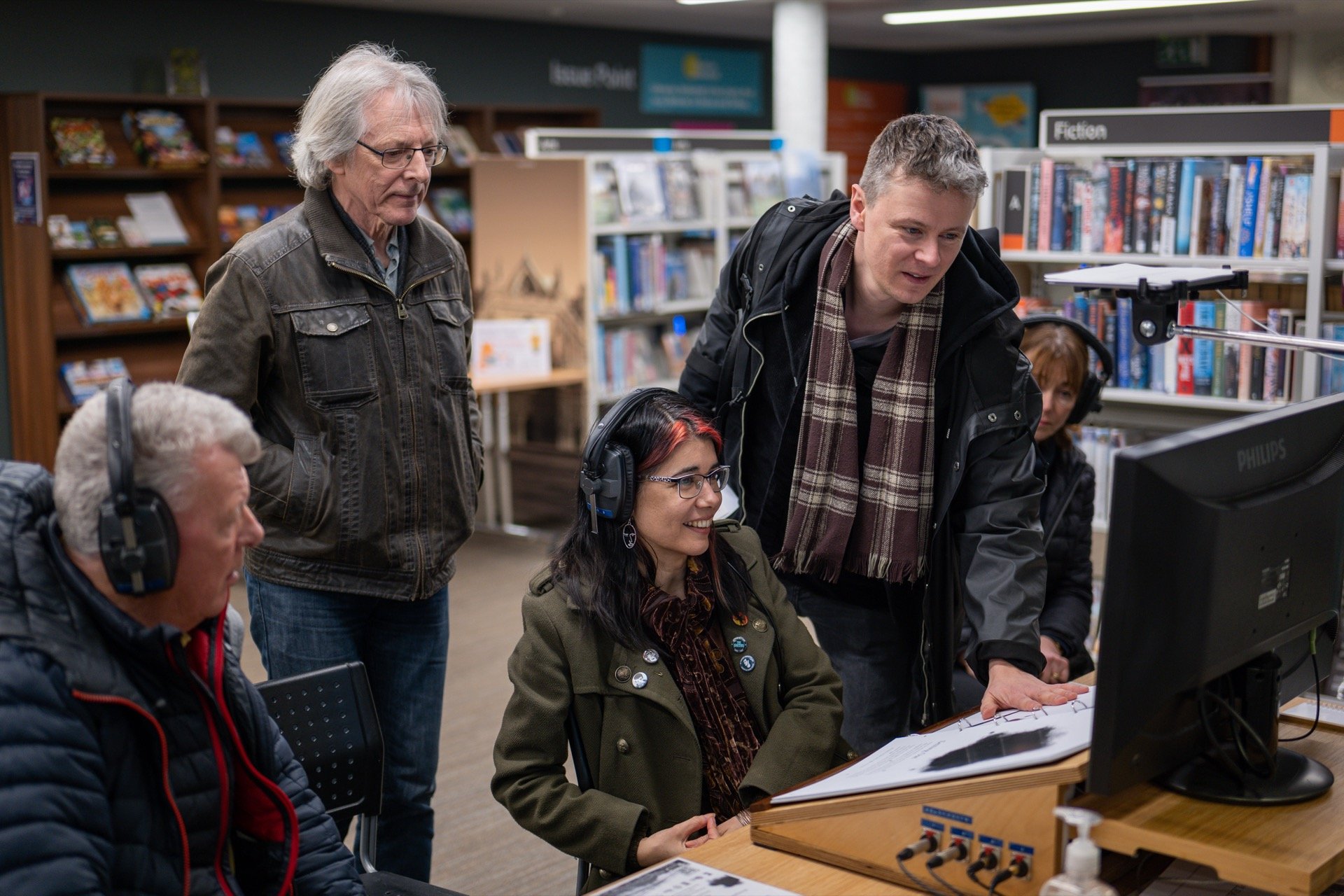
Readers could scan pages to encounter layered voices, atmospheric soundscapes, and visual elements that evoked the lives and labour of the women behind the collection. Rather than digitising the archive outright, the project augmented a physical publication – preserving the authority of print whilst opening new pathways into the material.
Launched at Exeter Library in March 2022 for International Women’s Day, the work functioned as an interactive art piece to demonstrate how AR can support cultural heritage, research communication, and public engagement. After a successful tour around several hosting libraries, the installation is now free to experience at its permanent home at Exeter Library.
Minny Stynker
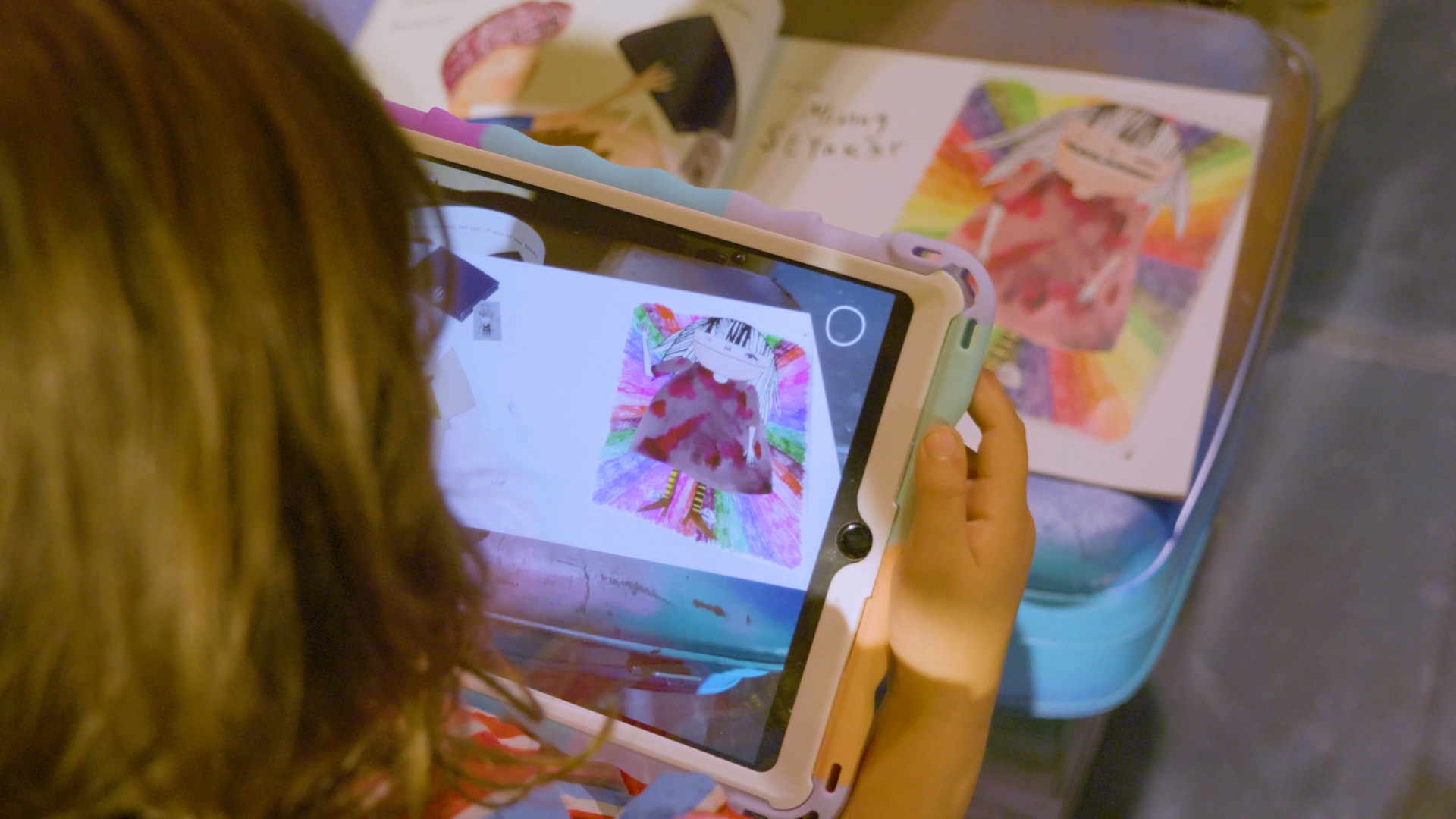
Zubr collaborated with theatre-maker and illustrator Tomasin Cuthbert of Soap Soup Theatre, to add a digital layer to Tomasin’s ‘Minny Stynker’ picture book. Creating an experience designed to spark children’s imagination, we designed a companion app which brings the printed story to life with layered animation, narration, and an immersive soundscape by composer Tom Ball.
Supported by our tech, Tomasin ran a series of interactive workshops for children, inviting them to draw their own “imaginary friend” on paper and watch it transform into a poseable 3D AR character. These creations could explore interactive environments such as outer space or an enchanting woodland scene, encouraging playful storytelling, creativity, and personal expression.
Originally developed to support children with chronic illness or long hospital stays, the project emphasises meaningful social engagement and accessibility, allowing families and communities to participate together. Funded by Arts Council England and The Space, this project demonstrates how AR books can move beyond passive reading to become collaborative, creative experiences where children are not just readers, but makers.
Why do AR Books matter?
Across these projects, a consistent theme emerges. AR books are not distracting gimmicks layered onto print, rather they are tools for connection. Whether academic or emotional, our digital layers emphasise the core messages behind each text or illustration.
With AR books, you can:
- Encourage exploration and awareness of important topics
- Increase access into complex or fragile cultural material
- Add atmosphere, sound, and motion to storytelling
- Support different learning styles
- Enable participatory creativity
- Extend engagement beyond the page
As AR technology becomes more accessible, we see growing opportunities for publishers, educators, artists, and institutions to create meaningful hybrid experiences. The future of reading may not be purely digital or purely physical, but something richer in between.
We’ve also created VR experiences within the literary realm, such as our VR book launch experience for Thomas R Weaver’s sci-fi novel Artificial Wisdom, which debuted at Capital Crime 2025.
Interested in creating an AR book or adding augmented layers to an existing publication? Get in touch with Zubr to explore what’s possible.